 tacey
tacey Install on Shopify
From January 2025 to January 2026, orders from AI searches on Shopify stores increased 15 times. Not 15 percent. 15 times.
That number comes from Shopify's agentic commerce data, confirmed by Ambaum's merchant guide. It shows a major shift in how orders arrive. A growing share of sales are now started by an AI agent browsing, comparing, and even checking out for a customer.
This is not a future trend. It is the current state of commerce in 2026. It is changing order operations for Shopify merchants in ways that checkout optimization and fulfillment speed alone cannot fix.
What is agentic commerce?
Agentic commerce is a model where AI agents research, compare, and buy products for shoppers. The AI completes approved transactions with minimal human help. It acts on the customer's behalf instead of just offering recommendations.
A customer can use ChatGPT, Microsoft Copilot, or Google's AI to describe what they want. The AI agent then searches merchants using Shopify's Catalog. It finds relevant options and can complete the checkout inside the conversation. This process uses open protocols like the Universal Commerce Protocol (UCP), which Shopify co-developed with Google.
Shopify's news release on agentic storefronts explains that its existing infrastructure now powers selling through AI agents. For eligible merchants, products appear in platforms like ChatGPT by default. This requires no separate integration or extra transaction fees beyond standard processing.
Orders from agentic storefronts flow into the Shopify admin. They include channel attribution showing which AI platform drove the sale. For the merchant, the order looks like any other in the Unfulfilled queue. The only difference is how it got there.
How does agentic commerce affect my order operations?
Agentic commerce introduces risks like poor address data and unpredictable order spikes. It also changes how you measure channel performance. You must actively build customer relationships, since the AI handles the initial transaction and may not share contact information.
Several parts of order operations change in ways merchants may not be ready for:
- Address data quality risk increases. An AI agent pulls the shipping address from the customer's stored account data. The customer never reviews it at checkout. An address that was correct two years ago may be outdated today, but the AI has no way to know the customer moved.
- Order velocity becomes less predictable. AI agents operate at machine speed. A purchase that took a human 20 minutes can be done in seconds. A product recommendation in a popular AI chat can create an order spike that is faster and steeper than any paid social campaign.
- Channel attribution changes how performance is measured. Ambaum's guide notes that AOV from AI channels is often higher than from direct traffic. This is because agents filter for the most relevant, high-value products. These are valuable orders from customers who never touched the checkout form.
- The post-purchase relationship is the merchant's job to build. Shopify's agentic shopping guide states that some AI platforms only share data needed to complete the order. This may exclude email addresses. Merchants need post-purchase touchpoints to build a direct relationship.
How do I set up my store for agentic commerce?
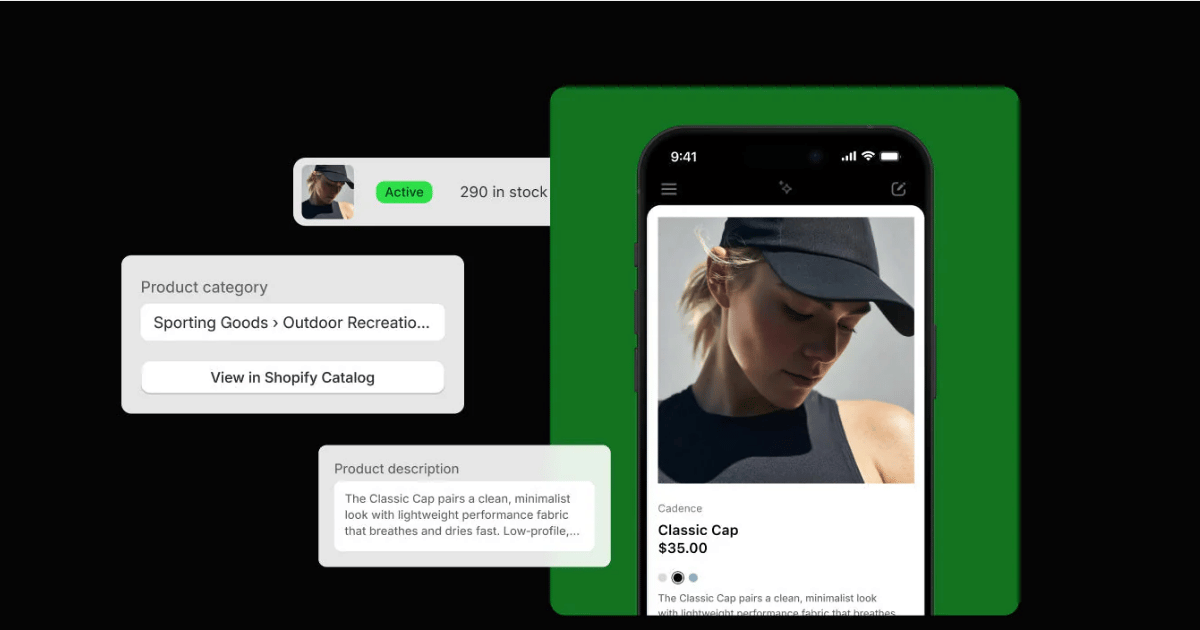
Shopify manages most of the infrastructure. Your main job is to provide clean, complete, and structured product data. This includes full titles, accurate descriptions, and correct inventory counts. Shopify then syndicates your catalog to AI platforms like ChatGPT and Copilot.
For merchants, Shopify's Agentic Storefronts syndicates product data to AI platforms from a single setup in the admin. You can toggle individual AI channels on or off. The technical layer is handled by the Universal Commerce Protocol (UCP), which defines how agents find products and complete transactions.
Your main task for agentic commerce is the same as for SEO: clean product data. You need complete titles, accurate descriptions, filled attribute fields, GTINs, and correct inventory. Stores with incomplete catalog data are filtered out of agent recommendations, while stores with complete data are surfaced.
Why does agentic commerce increase order errors?
Agentic commerce increases errors because the customer never reviews their shipping address at checkout. The AI uses stored data, which can be outdated. This removes the manual check that catches mistakes like old addresses or missing apartment numbers, making post-checkout validation more critical.
The order enters your Shopify admin as Unfulfilled and looks normal. Your fulfillment process takes over. If the address is outdated or missing a unit number, your operations layer must catch it. The AI platform that placed the order has no role in what happens next.
As agentic orders increase, the share of orders where a human reviewed the address decreases. The manual backstop is gone. According to Shippo, 2.1% of e-commerce parcels already have address issues. A post-checkout order intelligence layer becomes more important, not less.
Tacey operates between payment confirmation and fulfillment on every Shopify order, regardless of which channel generated the sale. Agentic orders that carry stale address data are checked the same way standard checkout orders are, and the customer can fix the address on the order status page before it ships. The channel does not change the check. Plans start at $29 a month for 750 orders and scale with order volume, with a 14-day free trial.
Frequently asked questions
How do AI agents place orders on Shopify?
AI agents use Shopify's catalog and the Universal Commerce Protocol (UCP) to find products and complete checkout. This happens directly within an AI conversation, using the customer's stored payment and shipping information. The order then appears in your Shopify admin like any other sale.
Do I pay extra for sales from AI agents?
No. For eligible merchants, products are syndicated to AI platforms by default. According to Shopify's agentic commerce overview, there are no additional transaction fees beyond your standard payment processing rates.
What is the biggest risk with agentic commerce orders?
The biggest risk is incorrect shipping information. Because the AI uses stored data and the customer does not review the address at checkout, the chance of using an old or incomplete address increases. This can lead to failed deliveries and customer support issues.
How does agentic commerce affect order volume?
Agentic commerce can cause order velocity to become less predictable. As noted by Stormy AI's automation guide, AI recommendations can create sudden, steep spikes in orders that are unlike traditional marketing-driven traffic.
What is my main job to prepare for agentic commerce?
Your primary responsibility is maintaining clean, complete, and structured product data. This includes accurate titles, descriptions, attributes like GTINs, and real-time inventory counts. This ensures your products are visible and correctly represented to AI agents.
How can I build customer relationships from agentic orders?
Since AI channels may not share customer emails, you must create post-purchase touchpoints. Use packaging inserts, QR codes, or prompts on the order confirmation page to encourage newsletter sign-ups. This allows you to capture the direct relationship that the AI channel intermediated.
 Install on Shopify