 tacey
tacey Install on Shopify
A failed delivery is not the end of a customer relationship. For most Shopify merchants, it feels that way because the failure arrives with a support ticket, a frustrated customer, and the cost of a reship that was never budgeted. The merchants who have worked out how to handle delivery failures systematically, with clear processes and fast communication, report something that surprises them: customers who experience a well-handled delivery failure often become more loyal than customers whose orders arrived without a problem.
This article is a practical breakdown of how that works, why it works, and what you need to put in place to make it happen consistently rather than by accident.
What does a failed delivery actually cost my store?
A failed delivery costs more than just the reshipment. When handled poorly, it can lead to chargebacks, negative reviews, and the permanent loss of a customer's future business. The total cost, including lost lifetime value, can be hundreds of dollars for a single incident, far exceeding the price of the product.
Before covering what good looks like, the cost of bad is worth understanding clearly. A 2023 survey by Convey found that 84% of shoppers will not return to a retailer after a poor delivery experience. This means the way you handle the problem matters more than the problem itself.
Customers can tell the difference between merchants who communicate proactively and those who make them wait. MetaPack's 2023 State of e-Commerce Delivery report found that 96% of consumers say delivery experience impacts their decision to buy again. Critically, 73% of shoppers cited proactive communication as the most important factor in their assessment.
The financial breakdown of a single failed delivery handled badly includes several costs:
- Carrier redelivery attempt: approximately $8 to $17 per attempt (Shippo, 2023)
- Return shipping for undeliverable parcel: $8 to $15 for a standard small parcel
- Reship cost: full outbound shipping plus the cost of replacement product if lost or damaged
- Support ticket resolution: 15 to 30 minutes of staff time per ticket
- Chargeback fee: $50 to $100 plus product loss (Chargebacks911, 2024)
- Lost future revenue: the entire expected lifetime value of the customer
For a merchant with a $120 average order and a $480 customer lifetime value, a single failed delivery can have a true cost between $530 and $700. The reship cost is visible, but the lost lifetime value is the largest and most damaging expense.
How can a delivery problem increase customer loyalty?
This effect is called the service recovery paradox. A customer who experiences a service failure that you resolve quickly and effectively can become more loyal than a customer who had no problem at all. Your excellent response makes the brand visible and proves you can be trusted when things go wrong.
The research explaining this phenomenon has been documented for over 30 years. The original study by McCollough and Bharadwaj (1992) showed that customers rated their satisfaction higher after an effective recovery than if the service had been perfect from the start.
The mechanism is psychological. A smooth delivery is expected and forgettable. When something goes wrong and the brand responds well, it creates a positive, memorable experience. The customer learns that your company will take care of them, which builds a stronger connection than a simple, uneventful transaction.
However, the paradox has limits. It works best when:
- The failure is not severe or caused by merchant negligence.
- The recovery is fast and requires little effort from the customer.
- The resolution exceeds the customer's expectations.
- Communication is proactive, not just a reaction to a complaint.
Merchants who turn failures into loyalty are not performing miracles. They are executing a defined process, consistently and quickly, that meets these conditions every time.
How quickly do I need to respond to a delivery issue?
You should respond to a delivery issue within one hour of discovering it. Research shows that customers who receive a response within an hour rate their experience significantly higher than those who wait longer. The key is to know about the problem before the customer contacts you, which keeps this window open.
The critical window opens when the customer first learns of the problem and closes about 24 hours later. Zendesk's 2024 Customer Experience Trends Report found that 73% of customers expect a response within that timeframe. More importantly, a response within one hour leads to a 26% higher satisfaction rating.
The challenge is that most merchants only learn of a failed delivery when the customer complains. By then, the customer is already frustrated, and the window for a positive recovery has narrowed. You are reacting to a problem instead of managing an experience.
Merchants who win in this situation monitor delivery statuses and receive internal alerts for carrier exceptions. This allows them to contact the customer proactively, control the narrative, and resolve the issue before it becomes a complaint.
What are the common types of delivery failures and how should I handle them?
The three most common delivery failures are address exceptions, failed delivery attempts, and lost or damaged parcels. Each requires a distinct response, from simple address correction to immediate reshipment. Treating them all the same leads to poor outcomes and frustrated customers.
| Failure Type | What Happens | How to Respond |
|---|---|---|
| Address Exception | The carrier cannot find the delivery address due to an error like a missing apartment number or wrong postal code. The parcel is held or returned to sender. | Contact the customer within 2 hours of the exception. State the problem clearly, provide a way to correct the address, and give a revised delivery estimate. No compensation is usually needed if the error was on the customer's side. |
| Failed Delivery Attempt | The carrier attempts delivery at the correct address, but no one is available to receive the package. The carrier leaves a notice or holds the parcel at a depot. | Send an automated notification from your store (not just the carrier). Include the depot address, collection hours, and a link to the carrier's redelivery scheduling page. This is about being helpful, not apologizing. |
| Lost or Damaged in Transit | The parcel stops tracking or arrives with visible damage. This is the most serious failure, with the highest risk of chargebacks and customer loss. | For lost parcels, start a carrier investigation and tell the customer immediately. For damaged items, ask for photos for your claim, then reship or refund right away. Offer a discount on a future order to rebuild goodwill. |
How should I communicate with customers about a delivery problem?
Your communication should be a pre-written, structured sequence. State what happened, what you are doing about it, and what the customer needs to do. Avoid vague language, blame, and instructions that force the customer to contact the carrier themselves. Your goal is to provide clarity and take ownership.
The structure of a well-written failure communication is simple and direct:
- First sentence: State what happened, specifically. "Your order is being held at the carrier depot because the delivery address needs a small correction."
- Second paragraph: State what is happening next, with a specific timeframe. "We have contacted the carrier and expect to have this resolved within 24 hours."
- Third paragraph: Tell the customer what action, if any, is required from them. If they need to do nothing, say so explicitly.
- Closing: Provide a direct contact method for follow-up questions. This reduces anxiety even if the customer never uses it.
What to avoid in failure communications:
- Passive voice that obscures responsibility ("your order appears to have been delayed").
- Language that implies the customer caused the problem.
- Multiple, performative apologies. One clear apology is enough.
- Vague timelines like "as soon as possible".
- Instructions that require the customer to contact the carrier directly.
What should I do after a delivery issue is resolved?
Send a follow-up email 3 to 5 days after the issue is resolved. This confirms the delivery was successful and shows you tracked the issue to completion. It is also the perfect moment to include a discount code to thank the customer for their patience and encourage a future purchase.
This follow-up has two functions. First, it confirms you saw the resolution through. Second, it is a natural moment to convert the difficult experience into a next purchase. Post-purchase emails have high open rates, making them an effective channel for this kind of offer.
The follow-up message should:
- Confirm the replacement or corrected order arrived.
- Briefly acknowledge the experience was not ideal.
- Include a discount code for their next order as a thank you.
- Avoid further apologies at this stage.
According to Klaviyo's email benchmark data, post-purchase emails have open rates of 55-65%. A discount code in this context converts at a higher rate because the customer is already primed by the positive resolution experience to view your brand favorably.
How can I find out about delivery problems before my customer does?
Use systems that monitor carrier tracking events and trigger internal alerts when exceptions occur. This allows you to act before the customer even knows there is a problem. The most common failures, like address exceptions, can often be prevented entirely with pre-fulfillment address validation.
Catching delivery problems proactively requires monitoring at the order layer. This is technically straightforward through carrier tracking APIs but requires integration work that many merchants have not prioritized. Without it, you will always be reacting to customer complaints.
Many address-based failures are preventable if the address is validated before the label is printed. An address exception that reaches the carrier is a problem that could have been caught earlier, when correcting it costs nothing. The same correction after a carrier flag costs money, time, and customer goodwill.
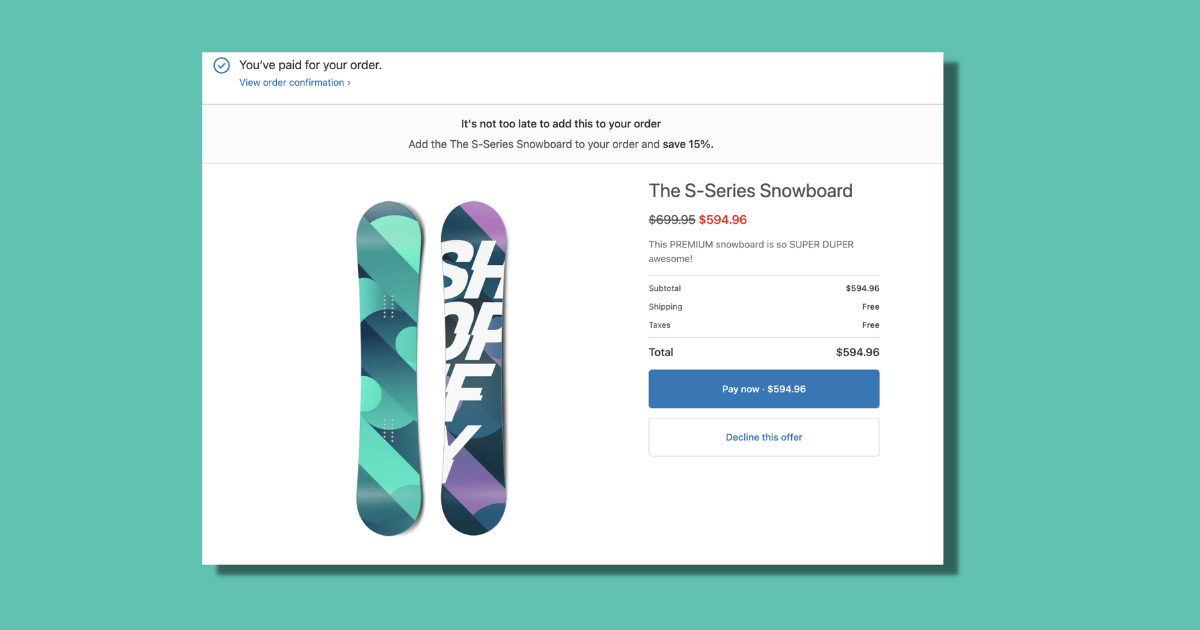
Tacey works between payment and fulfillment. The moment an order is placed, it checks the delivery address, tags anything questionable in your Shopify admin, and lets the customer correct it on the order status page before the warehouse sees the order. Pre-ship reminders bring the customer back to check their details while there is still time.
The type 1 failure category, address exceptions at the carrier, is the category most directly preventable at this layer. An address that is corrected before a label is printed never reaches the carrier with an error. The carrier exception never occurs. The customer never experiences the delay, the uncertainty of the failed delivery notification, or the need for a recovery communication.
The type 2 and type 3 categories (failed attempts and lost or damaged) are harder to prevent and require the response frameworks above. But the most common category, address exceptions, is largely preventable with post-order, pre-fulfilment validation.
Should I ask for a review after a delivery problem?
Yes, you should absolutely ask for a review 7 to 10 days after a well-handled failure. Customers who have a problem resolved effectively often leave the most persuasive reviews. They have a complete story to tell about how your brand took care of them, which is powerful social proof for future buyers.
Trustpilot's consumer review research found that 77% of consumers read reviews before buying. A review that describes a problem resolved professionally is more convincing to a new customer than one that simply says the product was good. It demonstrates your commitment to customer service.
Your review request message should:
- Briefly reference the recent delivery hiccup.
- Express hope that the resolution met their expectations.
- Ask specifically if they would be willing to share their experience.
- Link directly to your preferred review platform.
The conversion rate on this type of request is high because the customer is already emotionally engaged with your brand from the recovery experience. You are asking them to complete a story they are already part of.
What's the financial impact of a good delivery recovery process?
A good recovery process directly preserves thousands of dollars in customer lifetime value. For a store with 50 delivery failures a year, retaining just 60% of those customers through better service can preserve over $14,000 in future revenue, while also preventing chargebacks and reshipment costs.
The commercial case comes down to a straightforward calculation. For a merchant with a $120 average order value and a $480 customer lifetime value:
- Without a recovery process: If 84% of 50 affected customers leave, that is 42 lost customers. This equals $20,160 in lost lifetime revenue per year, plus direct costs.
- With a recovery process: If you retain 60% of those customers, you keep 30 of them. This preserves $14,400 in lifetime revenue.
The net difference from implementing a solid process is significant. The cost of creating communication templates and monitoring is a one-time investment of time. The return is measured in lifetime value preserved, chargebacks prevented, and powerful reviews from happy customers.
Frequently asked questions
What is the service recovery paradox?
The service recovery paradox is the idea that a customer who experiences a problem that is handled exceptionally well can become more loyal than a customer who never had a problem. The positive recovery experience creates a stronger, more memorable bond with the brand.
What's the most common type of delivery failure?
The most common failure is an address exception. This happens when the carrier's system cannot match the shipping address to a known delivery point, often due to a typo, a missing apartment number, or an incorrect postal code. Many of these are preventable with address validation before shipment.
Should I offer compensation for a delivery issue?
It depends on the issue. For a lost or damaged package, a replacement or refund is mandatory, and a discount on a future order is a smart goodwill gesture. For a simple address correction where the customer made the error, a fast resolution is often sufficient compensation.
Should I tell the customer to contact the carrier?
No. You should never instruct the customer to contact the carrier directly to solve a delivery problem. As the merchant, it is your responsibility to manage the relationship with your shipping partners and resolve the issue on the customer's behalf.
How can I prevent address-related delivery failures?
Use an address validation tool before you print a shipping label. Systems like Tacey can check addresses immediately after an order is placed and allow customers to correct any errors on their order status page. This prevents the problem before the package ever leaves your warehouse.
Why is a follow-up email so important after a problem is solved?
A follow-up email confirms to the customer that you tracked the issue to its final resolution. It is also a high-engagement opportunity to offer a discount code as a thank you, which can drive a repeat purchase and solidify the customer's newfound loyalty.
What's the true cost of a single mishandled delivery?
The true cost includes the lost product, reshipment fees, support staff time, and any chargeback fees. Most importantly, it includes the loss of the customer's entire future lifetime value, which for many stores can be several hundred dollars from a single negative experience.
 Install on Shopify