 tacey
tacey Install on Shopify
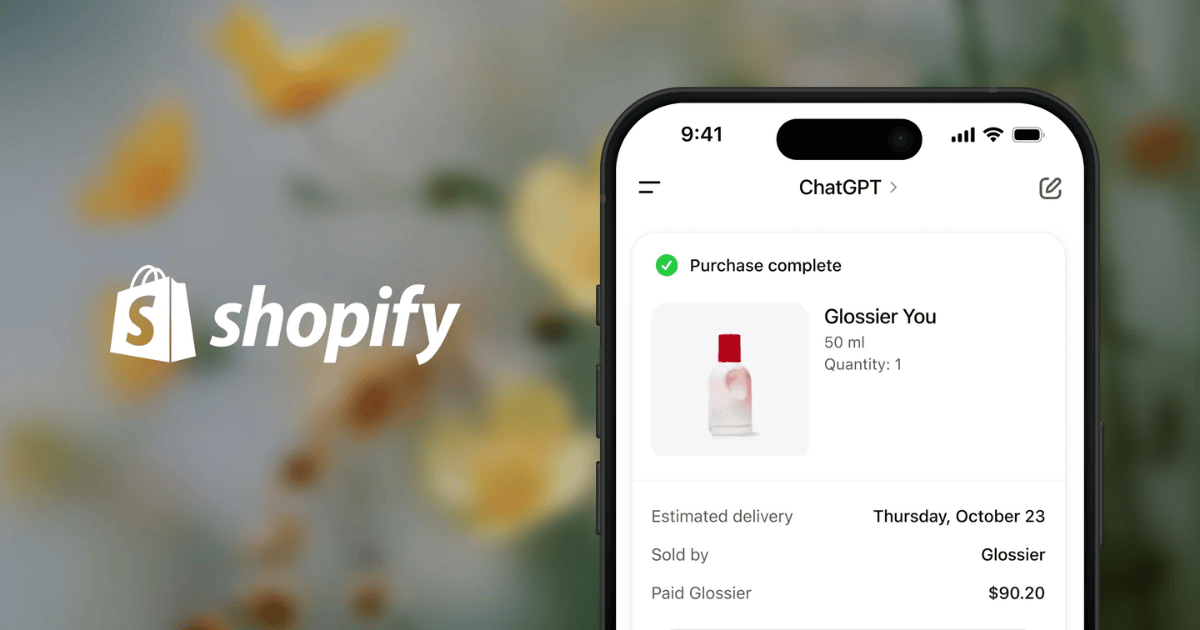
If you are on an eligible Shopify plan, your products are now discoverable and purchasable inside ChatGPT as of March 24, 2026. This requires no opt-in and no app to install. Orders are already flowing into stores that have not prepared for them, creating new challenges for fulfillment operations.
While many articles cover how to get discovered by AI, this one focuses on the back end. We will explore what changes in your order operations when AI channels drive a significant share of your volume. Preparing now can prevent serious problems as this channel grows.
What do Shopify orders from ChatGPT look like?
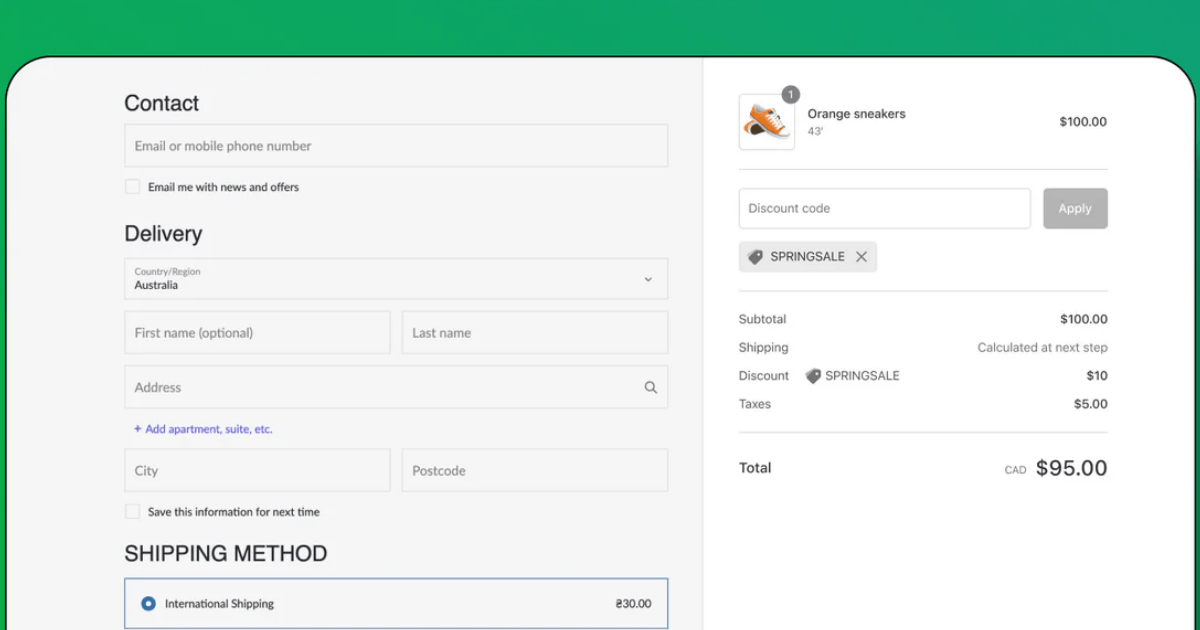
An order from ChatGPT looks nearly identical to a standard order in your admin. It has a customer, address, and line items. The key difference is that it was placed programmatically by an AI. This means it skipped the human-reviewed checkout process your store normally uses.
A standard order passes through a UI that a human interacts with. The customer types or confirms an address and reviews the details before paying. An AI-sourced order has none of this. The AI agent submits the order programmatically using data it already has, which may be outdated or imprecise.
The order arrives in your admin looking clean and confirmed. However, the address has never been reviewed by a human in the context of this specific purchase. The quality controls you rely on at checkout do not apply, but the order looks fine. This is where the operational risk begins.
How do AI orders change my store's operations?
AI orders change operations by bypassing your existing checkout-level tools. This means address validation apps no longer run, and fraud detection systems work with incomplete data. Your fulfillment process receives orders that have not been reviewed by a human, increasing the risk of shipping errors and associated costs.
- Address validation no longer happens at checkout. Apps like AddressGuard, Address Ninja, and Clearer.io work during the checkout flow. Since AI agents skip this flow, these apps cannot inspect the order. With the industry bad address rate at 2.1% (Shippo), the carrier correction fees of $25.50 from FedEx or up to $25 from UPS can accumulate quickly.
- Fraud detection works with incomplete data. Standard fraud detection uses behavioral signals like time on page or device fingerprint. AI transactions are programmatic and lack these human signals. An AI-placed order might seem clean and fast, leading to an inaccurate low-risk assessment from Shopify's system.
- Your fulfillment infrastructure receives unvetted orders. Your 3PL, order management system, and shipping software all assume an order has been vetted at checkout. AI orders break this assumption. While the order data has the same structure, the quality of that data is no longer guaranteed by a human review step.
What is the financial risk of bad addresses from AI orders?
The financial risk from unvalidated addresses scales with your order volume. A store with 500 monthly orders could face over $600 in annual carrier fees alone. At 1,500 orders per month, this cost can grow to thousands of dollars in fees and support labor, plus chargeback risks.
The table below shows how these costs can accumulate based on order volume and the growing share of AI-sourced sales. These figures use the existing 2.1% bad address rate, which may be conservative for AI-placed orders that lack a human confirmation step.
| Monthly Order Volume | Example AI Volume | Potential Bad Addresses (AI) | Estimated Annual Cost |
|---|---|---|---|
| 200 orders | 10% (20 orders) | Less than 1 per month | Modest, but establishes the risk. |
| 500 orders | 20% (100 orders) | 2 per month | $600 to $800 in carrier fees alone. |
| 1,500 orders | 30% (450 orders) | 9 per month | $2,700+ in fees and support labor. |
These figures do not include the cost of support labor for handling customer tickets or the cost of reshipping products. They also do not account for the potential for a higher bad address rate from AI channels, which source data from user profiles that may be out of date.
How can I fix problems with AI-generated orders?
The solution is to manage issues at the order layer, which is the time between payment and fulfillment. This requires tools that operate after an order is placed. These tools can validate addresses, assess fraud risk, hold problematic orders, and contact customers for corrections automatically.
Problems caught inside this window cost nothing to resolve. Problems that clear the window and reach a carrier cost a minimum of $25.50 per incident. Closing this gap requires four key capabilities:
- Post-order address validation. A system that inspects every incoming order, regardless of its source. It checks addresses against live carrier data and flags issues before the order goes to your warehouse.
- Signal-combination fraud evaluation. This approach evaluates orders using configurable signals like address mismatches or high order values from first-time buyers. It does not depend on the behavioral data that AI orders lack.
- Automatic fulfillment hold. When a problem is detected, the system automatically places a fulfillment hold in Shopify. This prevents the order from reaching your 3PL or warehouse queue until the issue is resolved.
- Automated customer contact and resolution. The system contacts the buyer directly, gives them a way to correct the issue, and releases the hold automatically when they do. Your team sees the resolution, not the initial problem.
Is this problem only with ChatGPT orders?
No, this problem is not limited to ChatGPT. Shopify's Agentic Storefront system also connects to Google AI Mode, Gemini, and Microsoft Copilot. The Universal Commerce Protocol aims to standardize this across platforms. A solution built for the order layer will handle all current and future AI commerce channels automatically.
Each AI channel uses different data sources, from Google accounts to Microsoft profiles. The operational challenge remains the same for all of them. The solution you build for ChatGPT today is the same one you will need for every AI channel that activates over the next 18 months.
The growth is already significant. AI-driven traffic to Shopify stores is up 7x since January 2025, and AI-attributed orders are up 11x over the same period, according to Shopify. These figures predate the mass activation of Agentic Storefronts, indicating the trend is accelerating.
What should I do now to prepare for AI orders?
You should implement a post-order validation layer now, while your AI-sourced volume is still low. This allows you to build and test your process before it is overwhelmed. Waiting until the problem is large means you will be fixing it under pressure while costs accumulate.
Merchants getting ahead of this are adding a post-order validation layer while AI volume is still manageable. The cost is the same, but implementing it early allows you to build and test the system before it needs to catch hundreds of bad orders. If you wait, you will be building under fire.
Tacey works at the order layer, not the checkout layer. The moment an order is placed from any channel, Tacey checks the shipping address. If it can't be confirmed, the order is tagged in your Shopify admin and the customer can correct it themselves on the order status page before it ships. A clean order moves on without any interruption, and nothing Tacey does touches the checkout.
Because Tacey operates at the order layer rather than the checkout layer, it handles every channel identically: standard checkout, Shop Pay, Apple Pay, TikTok Shop, ChatGPT, Copilot, Gemini, and any AI channel that activates in the future. The channel is irrelevant. The order layer is always the same.
Install Tacey from the Shopify App Store and try it free for 14 days. Plans start at $29 a month and scale with order volume.
The merchants who build this layer before their AI-sourced order volume grows will not notice the gap. The ones who wait will find out about it from their carrier, usually 90 days after the orders that caused the problem have already shipped.
Frequently asked questions
Why do my checkout address validation apps not work on ChatGPT orders?
Checkout validation apps require a customer to interact with a checkout form. AI agents like ChatGPT place orders programmatically via API, completely bypassing the checkout UI. Because your app's code never runs, it cannot validate the address before the order is created.
Are AI-generated orders more likely to be fraudulent?
Not necessarily, but they are harder to assess for fraud. AI orders lack the behavioral signals, like browsing time, that fraud systems rely on. A clean, programmatic transaction might receive a low-risk score even if other risk factors are present.
What is the "order layer" in Shopify?
The order layer is the window of time after a customer pays but before your warehouse begins fulfillment. During this period, you have full control to edit, hold, or cancel an order. Problems caught here can be fixed before they cost you money in shipping or returns.
How much do bad addresses cost a Shopify merchant?
Carriers charge significant fees for address corrections after a package has shipped. For example, FedEx charges $25.50 per correction, and UPS charges up to $25. These fees can add up to hundreds or thousands of dollars annually, depending on your order volume.
Will this problem get bigger in the future?
Yes, the problem is expected to grow. Shopify is integrating with multiple AI channels beyond ChatGPT, including Google AI and Microsoft Copilot. As AI-sourced orders become a larger share of your total volume, the operational gaps and associated costs will become more significant.
How does Tacey handle orders from different channels?
Tacey operates at the order layer, after an order is confirmed. This means it works identically for every sales channel, including your online store, Shop Pay, and all AI channels like ChatGPT. It inspects every order for issues regardless of its source.
 Install on Shopify