 tacey
tacey Install on Shopify

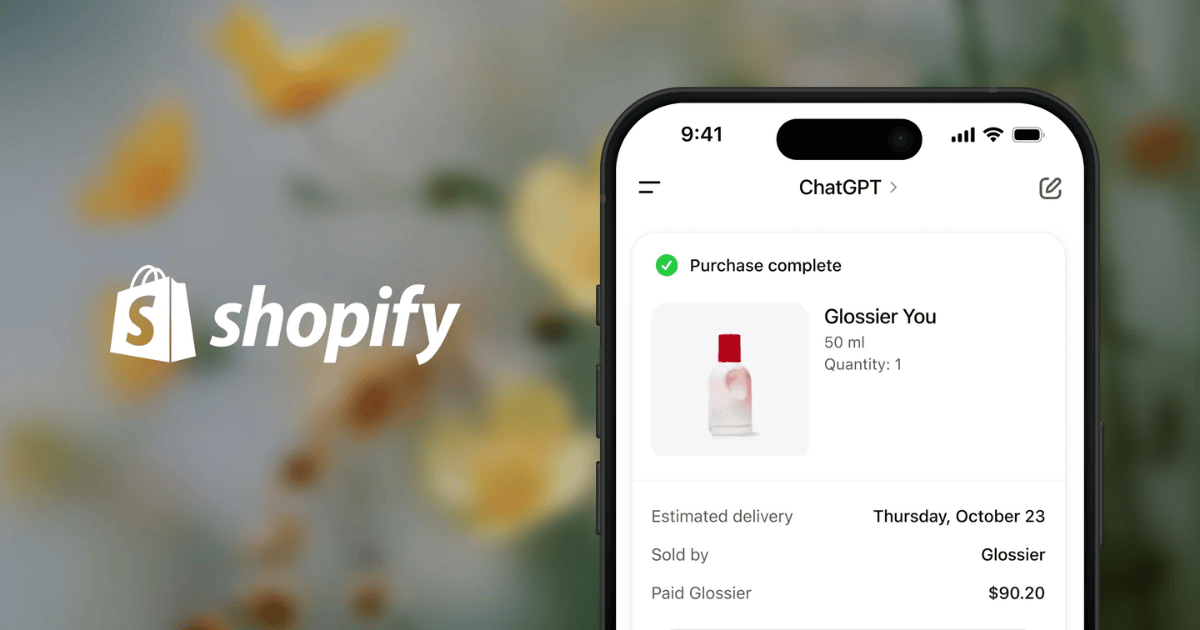
Shopify agentic commerce operations arrived faster than most merchants expected. On March 24, 2026, Shopify activated Agentic Storefronts by default for every eligible store. This gave 880 million monthly ChatGPT users the ability to discover and purchase from Shopify merchants without leaving the chat. Google AI Mode, Gemini, and Microsoft Copilot are also activating across the same merchant base.
AI-attributed orders on Shopify are up 11x since January 2025. AI-driven traffic is up 7x in the same period (Shopify). The front-end transformation of how customers find and buy products is well underway. The back-end transformation, how merchants run operations when many orders come from channels without a checkout UI, has barely started. Merchants who build for this deliberately will have a structural advantage.
How does agentic commerce change Shopify order operations?
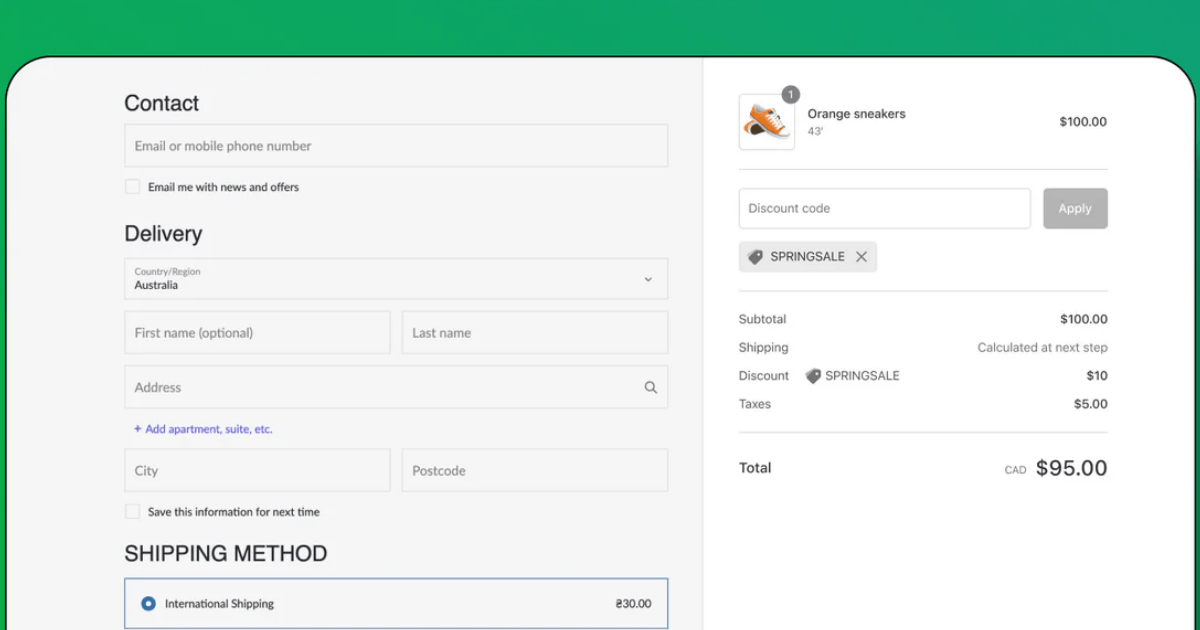
Agentic commerce orders are placed via API, bypassing the traditional checkout form. This means quality control tools that rely on the checkout moment, like address validators, no longer run. The responsibility for catching errors shifts from the checkout to the order layer, after payment is confirmed but before fulfillment begins.
For the last decade, Shopify order operations assumed that orders arrive after a human interacts with a checkout form. This shaped the entire post-checkout merchant stack. Address validators, fraud detectors, and order management systems were all built around the checkout moment as the point where problems get caught. Agentic commerce does not route through the checkout moment.
When an AI agent buys on a customer's behalf, the order is submitted programmatically. There is no checkout form for a customer to review. There is no validator to flag a missing apartment number before payment. The order arrives in the admin with a payment confirmation, but the quality control layer was never part of the transaction path. This is the fundamental architecture of agentic commerce.
The question is not how to restore the checkout moment to agentic orders. It is how to replace the quality control function the checkout moment used to provide. The answer is to move this function to the order layer.
What is the Shopify order layer and why is it important now?
The order layer is the operational window between payment confirmation and warehouse fulfillment. It is now the main point for quality control because agentic commerce bypasses the checkout layer. Catching errors here is significantly cheaper than fixing them after an order has shipped, saving you from carrier fees and reshipment costs.
Every Shopify merchant has this window. It opens when payment is confirmed and closes when a pick slip prints or a fulfillment service commits to the order. Inside this window, the merchant has full control. The order can be inspected, corrected, held, or canceled. The carrier has not seen it, the warehouse has not committed to it, and the customer cannot reasonably object to a brief hold.
The cost structure inside this window is fundamentally different from the cost structure outside it. Agentic commerce makes the order layer essential. It becomes the only point where quality control can operate on every order, including those that never passed through a checkout UI.
| Issue | Cost Inside the Window | Cost Outside the Window |
|---|---|---|
| Bad Address | Nothing to correct. | A minimum of $25.50 in FedEx carrier correction fees (2026 rate card), plus an average of $17.20 per failed delivery attempt (Loqate), plus support and reshipment costs. |
| Fraud Signal | Nothing to review. | The product value, the carrier cost, and a chargeback fee of $50 to $100 if the charge is disputed. |
What capabilities do I need for agentic commerce operations?
A future-ready order stack needs six capabilities working together. These include intercepting all orders at the order layer, validating addresses post-purchase, evaluating fraud without session data, automating fulfillment holds with customer resolution loops, providing a merchant escalation queue, and offering clear analytics on performance.
1. Universal Order Interception
The first capability is intercepting every order regardless of its source channel. This includes standard checkout, Shop Pay, TikTok Shop, ChatGPT, and any future channels. Interception must happen at the order layer, not the checkout layer. Tools that operate at the Shopify orders/create layer see every order that enters the admin, regardless of how it arrived.
2. Post-Order Address Validation
The second capability is address validation that operates on the intercepted order. This means checking the shipping address against live carrier and postal data after payment is confirmed but before fulfillment begins. For international sales, this includes handling country-specific postal formats, postal code structures, and non-Latin script addresses.
3. Signal-Combination Fraud Evaluation
The third capability is fraud evaluation that works from transaction signals instead of behavioral signals. Agentic orders carry no browsing session data or device fingerprint. An agentic-ready fraud system must read transaction signals like billing and shipping address relationships, first-time buyer status, and email domain characteristics to spot orders worth reviewing.
4. Automated Fulfillment Hold With Customer Resolution Loop
The fourth capability is automated hold and resolution. When a problem is found, the order must be held before the warehouse commits to it. The customer should be contacted automatically with a clear path to resolve the issue. The hold should release automatically when the correction is accepted, minimizing manual intervention for the merchant.
5. Merchant Escalation Queue for Edge Cases
The fifth capability is a structured escalation path for cases that automation cannot handle. Some orders require human judgment, like a high-value first-time order to a freight forwarder. These cases need to reach the merchant with enough context to make a quick decision: release to fulfillment, contact the customer, or cancel the order.
6. Analytics That Measure Order Layer Performance
The sixth capability is visibility into the order layer's performance. You need to know how many orders were validated, held, or auto-resolved. This data provides a clear ROI and helps you identify patterns that may require configuration changes. Without this visibility, the order layer is a black box.
What will my order mix look like in the next 12-18 months?
AI-sourced orders will likely represent 15% to 35% of total Shopify order volume for many merchants within 12 to 18 months. This growth is driven by platform integrations like Shopify's Agentic Storefronts and the Universal Commerce Protocol, which is co-developed by Shopify and Google and endorsed by major retailers.
Forecasting the exact trajectory is difficult, but the direction is clear. Every major AI platform is investing in commerce integration. AI-attributed orders on Shopify grew 11x year-over-year even before Agentic Storefronts launched as a default feature. The rate after launch will be higher.
Consider a store with 500 orders per month. If 25% are AI-sourced, that is 125 orders. At the industry's 2.1% bad address rate (Shippo), that is 2.6 bad addresses monthly from the AI channel alone. This could generate up to $66 per month in carrier fees before any other costs. Merchants who build their order layer capability now will handle this growth smoothly.
Which merchants are most at risk from agentic commerce?
Merchants with high-AOV products, a large share of first-time buyers, or international sales face the most operational risk. Also, those selling perishable, fragile, or hard-to-replace items have the highest total cost exposure per bad order created by an AI agent. Not every Shopify merchant faces equal exposure.
- Merchants with high-AOV products face the highest financial exposure per incident. A bad address on a $300 order costs much more in potential losses and reshipment than the same error on a $30 order.
- Merchants with many first-time buyers have less data to work with. AI agent transactions for new customers carry the least contextual information for fraud and address quality evaluation.
- Merchants selling internationally face more complex address validation problems. AI-sourced international addresses introduce challenges with postal formats and transliteration that domestic addresses do not have.
- Merchants with hard-to-replace products face the highest total cost per bad order. A fragile or custom item sent to the wrong address can be a significant, unrecoverable loss.
Should I build an order layer now or wait?
Building an order layer capability now, while AI channel volume is still growing, is a proactive measure. Waiting until the problem is visible on your P&L means you will be building under pressure while already accumulating costs from carrier fees, support overhead, and chargebacks. The choice is when to build, not whether to build.
The window for building proactively is open now. AI-sourced volume is growing but has not yet reached a critical share of orders for most stores. Merchants who close the gap now will process the growth in AI channel volume without noticing the operational impact. The ones who wait will experience the impact first and build the solution second.
Tacey covers the part of this layer a customer and a merchant can act on together. Every order's shipping address is checked the moment it is placed, whatever channel it came from, and anything it can't confirm is tagged in your Shopify admin. The customer can then fix their own order on the thank you and order status pages before it ships: correct the address, update contact details, swap a variant, change a quantity, add an item or cancel.
Pre-ship reminders bring them back while the edit window is still open, and every change is recorded with what it cost and who asked.
Install Tacey from the Shopify App Store and try it free for 14 days. Plans start at $29 a month and scale with order volume.
Agentic commerce is a structural shift in how customers interact with commerce. The merchants who treat it as a front-end distribution story and ignore the back-end operational implications will find out what they missed when the carrier invoices arrive. The ones who build the order layer now will simply not notice the problem exists.
Frequently asked questions
What is agentic commerce on Shopify?
Agentic commerce is when an AI agent, like ChatGPT or Gemini, makes a purchase on a customer's behalf. On Shopify, this happens through Agentic Storefronts, which allow AI to place orders programmatically without using the traditional online store checkout.
Why don't checkout apps work on agentic orders?
Checkout apps are built to run during the checkout process on your storefront. Agentic orders are submitted directly to Shopify's API and completely bypass the checkout UI, so these apps never have a chance to run their validation or fraud checks.
What is the "order layer"?
The order layer is the operational window between when a customer's payment is confirmed and when the order is sent to your warehouse for fulfillment. It is the ideal time to perform quality control checks, as the order can be held, corrected, or canceled at minimal cost.
How much does a bad shipping address cost?
A bad address that is not caught before shipping can cost a minimum of $25.50 in carrier correction fees (FedEx, 2026). It can also lead to failed delivery attempt fees, which average $17.20, plus the costs of customer support and potential reshipment.
What kind of fraud detection works for agentic commerce?
Fraud detection for agentic commerce must rely on transaction signals rather than behavioral data. This means analyzing factors like billing and shipping address relationships, first-time buyer status against order value, and email domain characteristics to identify potentially fraudulent orders.
How many of my orders might come from AI agents?
For planning purposes, you can assume that AI-sourced orders will represent between 15% and 35% of your total order volume within the next 12 to 18 months. This will vary depending on your product niche, price point, and customer demographics.
Which merchants are most affected by this shift?
Merchants with high average order values, a high percentage of first-time buyers, or significant international sales face the greatest risk. Those selling fragile, perishable, or custom products also have higher exposure due to the increased cost of a lost or misdirected shipment.
 Install on Shopify