 tacey
tacey Install on Shopify

Shopify AI order fraud prevention has always been a game of reading human behaviour. How long someone spent on the product page, whether the device matched a known pattern, or if the billing and shipping addresses made geographic sense together. These signals are meaningful because they reflect a real person's decisions.
When an AI agent completes a purchase on a customer's behalf, none of those signals exist. The transaction arrives clean, fast, and technically perfect. Your fraud tooling is evaluating it with most of its inputs missing, which can lead to costly errors in judgment.
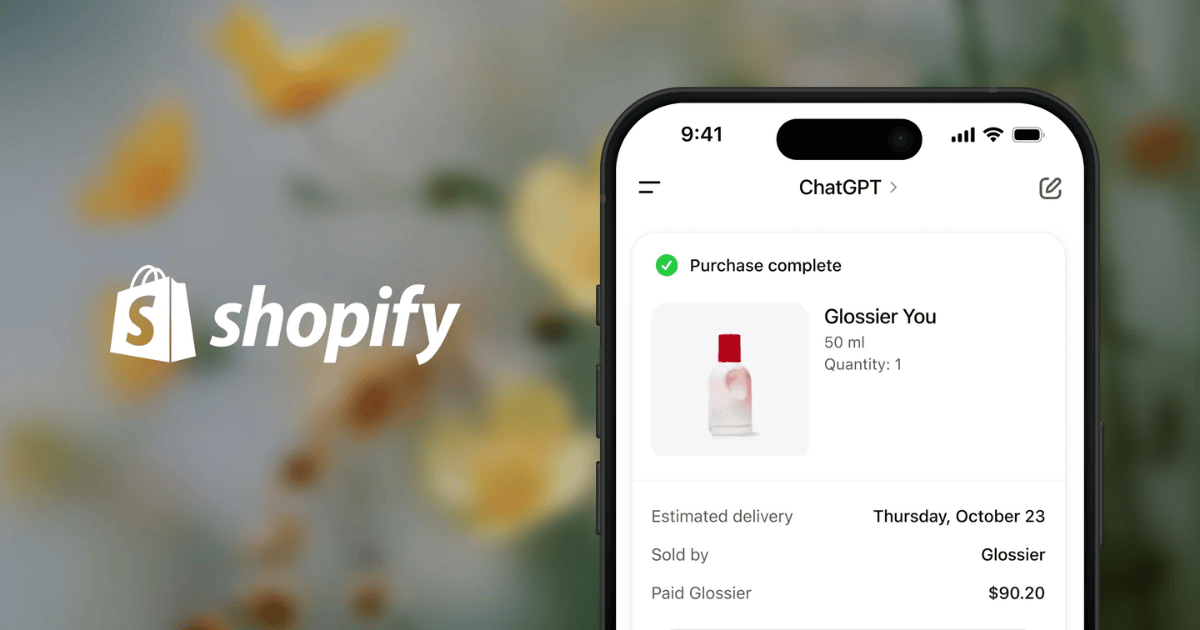
This is not a future problem. Shopify Agentic Storefronts went live for all eligible stores on March 24, 2026. AI-attributed orders are already up 11x since January 2025, according to Shopify. Merchants who understand what fraud detection looks like in an agentic world will catch problems. Those who rely on old tools will miss them.
Why does my fraud detection app miss problems with AI-placed orders?
Your fraud tools look for human browsing behavior, like time spent on a page. AI agents place orders programmatically, so they produce no behavioral signals. This makes the order seem technically perfect, causing systems built for human patterns to misjudge the actual risk and clear potentially fraudulent orders.
Standard Shopify fraud detection uses two inputs: transaction data and behavioral data. Transaction data includes order value, addresses, and payment method. Behavioral data covers how a customer navigated your store. These behavioral signals are expensive for fraudsters to fake at scale, making them a reliable part of risk assessment.
Agentic orders strip all behavioral signals out of the picture entirely, and they do so legitimately. When an AI completes a purchase, there is no browsing session, no time-on-page, and no device fingerprint. From a behavioral standpoint, the order looks exactly like a scripted transaction from software, not a person.
Shopify's built-in risk score may return a lower risk rating on an AI order because the execution is so clean. The system sees the absence of suspicious behavior as a positive sign. But on an agentic order, this absence tells you nothing about whether the underlying transaction is legitimate.
The result is that your fraud tooling may systematically underweight risk on new order sources. This is especially true where you have no purchase history, no behavioral baseline, and no checkout validation layer to catch problems before payment is confirmed.
What fraud signals should I look for in AI-generated orders?
Since behavioral data is absent, focus on combinations of transaction-level signals. A single flag, like a billing address mismatch, is not enough. The real risk appears when you see multiple signals together on the same order, such as a first-time buyer using a freight forwarder for a high-value purchase.
Evaluating agentic orders for fraud means reading transaction signals carefully and in combination. A single suspicious signal is rarely conclusive. The combination of two or three signals on the same order is where the risk picture becomes clear. Key combinations to watch for include:
- Billing and Shipping Mismatch With No Purchase History: A mismatch is common for gifts. It becomes a risk signal when combined with a first-time, high-value purchase submitted by an AI agent. While any one of these signals alone is unremarkable, all four together on the same order shift the risk profile significantly.
- Freight Forwarder Shipping Addresses: These are legitimate addresses for consolidating international shipments, but they are also used in fraud. In an agentic flow, this address may arrive without the usual flags from checkout-layer scrutiny, making the destination the only signal that warrants attention.
- High Order Value, First-Time Buyer, and New Email Domain: A high-value purchase from a new customer is often normal. The risk increases when the buyer also uses an email from an unfamiliar domain, which can happen when an AI uses the customer's platform account email. This combination is worth holding before the label prints.
- Velocity Clustering From the Same Billing Profile: An AI agent may submit multiple orders in a short window to complete a shopping list. This can look like fraud velocity. The risk is that your system may either flag legitimate orders or miss a fraudulent pattern by clearing each small order individually.
Can I trust Shopify's native fraud score for agentic orders?
Shopify's fraud score is less reliable for agentic orders because it lacks the behavioral data it uses for human-placed orders. A "medium" risk score on an agentic order may indicate a higher actual risk than the same score on a standard order and deserves more careful review.
For standard orders, Shopify's low, medium, or high risk indicator is a useful first filter. It tells you which orders deserve closer attention. For agentic orders, the score is working with an incomplete input set. The behavioral signals that inform a significant part of the risk calculation are absent by definition.
This does not mean the Shopify fraud score is useless for agentic orders. The transaction data it evaluates is still meaningful. It just means the score should be read with the understanding that the behavioral component is zero. The system is missing context that helps distinguish a fast, clean legitimate transaction from a fraudulent one.
The practical implication is that a medium risk score on an agentic order deserves more attention than one on a standard order. A merchant who treats them equivalently will systematically underweight the review priority for agentic orders relative to what the actual risk picture warrants.
What is the real cost of a fraudulent AI-placed order?
A single fraudulent order costs you the product value, shipping fees, and a chargeback fee of $50 to $100. For high-value items, this loss can be several hundred dollars. As AI order volume grows, these individual losses can accumulate into a significant financial impact for your store.
The product is typically gone and the carrier cost is sunk. The chargeback fee is an additional loss, charged regardless of whether the dispute is resolved in your favor. On a high-value agentic order where fraud signals were missed, the total loss on a single order can be substantial before counting the time spent on the dispute.
At low agentic order volume, this is a manageable risk. But with AI-attributed orders up 11x since January 2025 and accelerating since the Agentic Storefronts launch on March 24, 2026, the problem is growing. Merchants without a specific fraud evaluation layer for agentic orders will face a rising number of missed signals.
How can I build a better fraud detection process for agentic orders?
Implement an evaluation layer that runs after an order is placed, not during checkout. This system should analyze combinations of transaction signals, not just single flags. It must provide clear actions like holding an order for review, and be automated to handle the increasing volume of agentic purchases.
Closing the fraud detection gap on agentic orders requires adding an evaluation layer that reads transaction signals rather than behavioral ones. The practical requirements for this layer are specific:
- It must operate after the order is placed. Checkout-layer fraud tools have no surface area on agentic orders. The evaluation must happen between payment confirmation and warehouse fulfilment, where you still have control.
- It must evaluate signal combinations. A single flag is not enough. The system must recognize patterns, like a billing mismatch, freight forwarder address, and high order value on a single first-time purchase.
- It must produce an actionable output. A simple flag is not enough. The output should be a specific recommended action, such as holding the order, contacting the customer for confirmation, or passing it to fulfilment.
- It must handle growing volume. Manual review of every medium-risk agentic order is not scalable. The system needs to apply consistent logic automatically, escalating only the orders that truly warrant human attention.
Tacey is not a fraud screening tool, and it does not score orders for risk. Where it helps with AI-placed orders is the address: it checks every order's shipping address the moment it is placed, tags anything it can't confirm in your Shopify admin, and lets the customer fix their own address on the order status page before the order ships. For fraud, keep a dedicated tool alongside Shopify's own risk analysis.
It reads the full transaction picture, applies AI reasoning to the combination, and makes a decision: PASS, AUTO-RESOLVE, or FLAG. Orders flagged for fraud signal combinations go to the merchant's Escalation Queue with full AI reasoning attached, so the merchant can review the specific signal combination that triggered the hold and decide whether to release or cancel.
Install Tacey from the Shopify App Store and try it free for 14 days. Plans start at $29 a month and scale with order volume.
The merchants who build a transaction-signal fraud evaluation layer now will handle the risk without noticing it. Those who rely on behavioral fraud scoring built for a different world will continue seeing clean risk scores on orders that ship, only to find out later that those scores were not the reassurance they appeared to be.
Frequently asked questions
What is an agentic order?
An agentic order is a purchase completed by an AI agent on a customer's behalf through a Shopify Agentic Storefront. These transactions are submitted programmatically, meaning they lack the human behavioral signals, like browsing history or time on page, that traditional fraud detection systems rely on.
Why don't AI orders have behavioral signals?
AI agents submit orders directly at the API layer rather than browsing a storefront like a human. There is no navigation path, no time spent on product pages, and no device fingerprint from a person using a browser. The transaction is technically perfect but contains no behavioral data to analyze.
Is a billing and shipping address mismatch always a sign of fraud?
No, a mismatch on its own is not a reliable fraud indicator, as customers often ship gifts to addresses other than their own. It becomes a relevant risk signal only when combined with other factors, like a high order value from a first-time buyer with no purchase history.
Are freight forwarder addresses a sign of fraud?
Not necessarily. Freight forwarders are legitimate services used for international shipping, but they are also used in fraud schemes. The presence of a freight forwarder address is a signal that warrants attention, especially on a high-value order from a new customer placed via an AI agent.
How much is a typical chargeback fee?
Chargeback fees on disputed transactions typically run between $50 and $100 per transaction, depending on the payment processor. This fee is charged to the merchant regardless of whether the dispute is resolved in their favor, adding to the total loss from a fraudulent order.
Is Tacey a fraud detection app?
No, Tacey is not a fraud screening tool and does not score orders for risk. Its primary function is to validate shipping addresses after an order is placed. For comprehensive fraud protection, you should use a dedicated fraud tool in addition to Shopify's native risk analysis.
 Install on Shopify