 tacey
tacey Install on Shopify
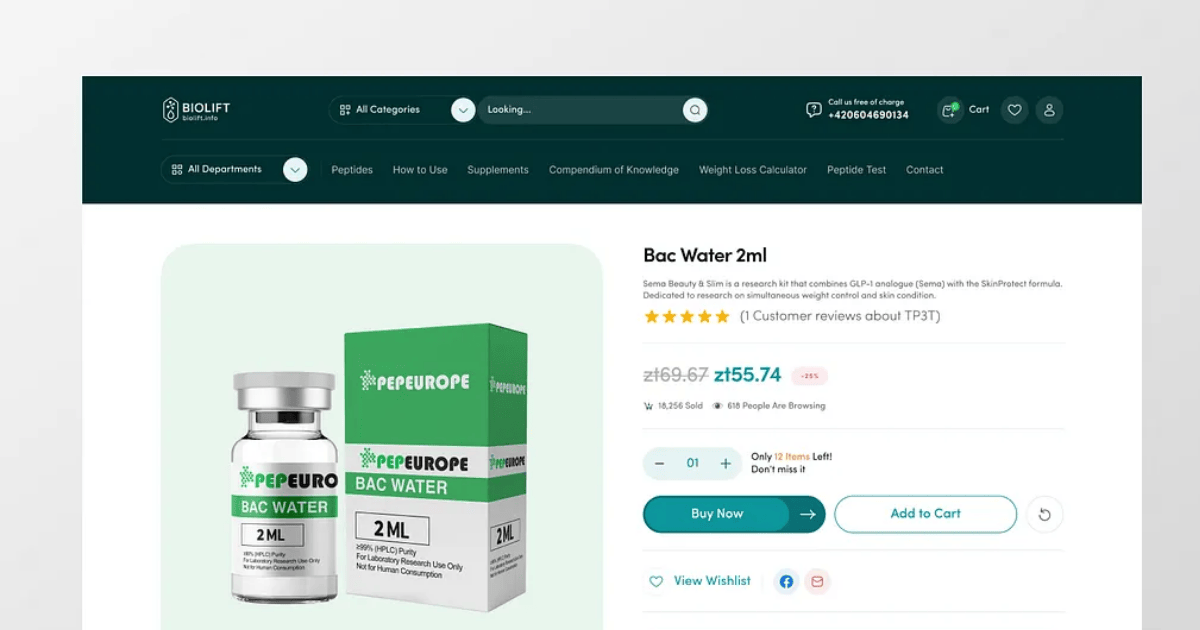
A customer who lands on your product page has already passed the hardest filter: they found your store, they were interested enough to click, and they are looking at the thing you sell. The purchase decision they make in the next 60 seconds is not primarily a question of whether they want the product. It is a question of whether they trust you enough to hand over their payment details. That question is answered, or not, by the trust signals your product page does or does not contain.
This article covers the specific trust signals that are measurably moving conversion rates on Shopify product pages in 2026, where to place them, the data behind each one, and what most stores are getting wrong.
| Trust signal | What it answers for the shopper | Where it belongs |
|---|---|---|
| Reviews, with volume shown | Have other people actually bought this? | Above the fold, near the price |
| Photo and video reviews | Does it look like the photos? | In the review block, customer images first |
| Trust badges | Is paying here safe? | Beside the add-to-cart button, not the footer |
| Shipping and delivery clarity | When does it arrive, and what does delivery cost? | On the product page, before checkout |
| Contact information | Can I reach a human if this goes wrong? | Header or footer, on every page |
| An About page that says who you are | Who am I buying from? | Linked from the footer and the product page |
| Above-the-fold completeness on mobile | Everything I need without scrolling | The first mobile screen |
Why is trust so important for my Shopify conversion rate?
Trust is a primary driver of conversions, not a secondary concern. Data shows nearly one in five shoppers abandon carts over security fears. On product pages, a lack of trust means customers never even reach the checkout, making it a critical variable for any store owner to address before focusing on other optimizations.
While most conversion rate optimization focuses on traffic and pricing, trust is often overlooked. Baymard Institute's 2026 checkout research identifies trust as a top-five reason for abandonment. Specifically, 19% of US shoppers left a purchase in the last three months due to payment security concerns (Statista, 2025). This is not a fringe issue; it affects a large portion of potential customers.
The problem begins on the product page. A customer who does not trust the page will never click "Add to Cart." According to Shopify's product page optimisation guide, 72% of consumers wait to buy until they have read reviews. Research from Sitetuners shows that having five or more reviews can lift conversion rates by up to 270%.
This is one of the largest single conversion levers available on a product page. Building trust involves a stack of specific elements, each addressing a different buyer hesitation. Stores converting above 4% typically have all of them in place, while those converting around 1.4% are often missing several.
How do I use product reviews to increase sales?
Place your average star rating and review count above the fold, near the product title. Aim for at least 5-10 recent reviews, as both volume and recency are major conversion drivers. Even a single review can lift sales, and the effect is much larger for higher-priced items that require more social validation.
The number of reviews is critical. PowerReviews research shows products with 11 to 30 reviews convert about 68% higher than those with none. The ideal spot for maximum impact is 26 to 50 reviews. This range signals credibility, while too many reviews on a small store can seem suspicious.
Data from the Spiegel Research Center shows a product with five reviews is 270% more likely to be purchased than one with no reviews. A single review can boost conversion by 10% or more (Fera, 2025). For high-priced items, reviews can increase conversion by up to 380%, showing that more expensive products need more social proof.
Placement determines if reviews actually convert. A star rating and review count buried at the bottom of the page are ineffective. This information must appear directly below the product title, visible on both desktop and mobile without scrolling. Shopify's own guidance highlights this as a best practice.
Recency is just as important as volume. Research from Popupsmart shows 83% of customers find reviews older than three months unreliable. A steady flow of new reviews from your post-purchase email sequence is essential. A store that stops collecting reviews is quietly losing conversions on every page.
Finally, do not hide negative reviews. A surprising 95% of customers suspect censorship or fake reviews if they see no negative feedback (Fera, 2025). A 4.6-star average with some critical comments is more believable than a perfect 5.0. Responding professionally to negative reviews also demonstrates excellent customer service.
Are photo and video reviews more effective than text?
Yes. Shoppers trust customer-submitted photos and videos more than brand content because they show the product in a real-world context. Seeing user-generated content (UGC) makes customers more likely to buy, and video testimonials can increase conversion rates by as much as 80% by answering questions static images cannot.
Data shows 62% of consumers are more likely to buy when they can see photos and videos from other customers (Trustmary, 2025). Furthermore, 72% of consumers trust customer-submitted images more than brand photography (WiserNotify, 2026). Brand photos show the product under ideal conditions, but customer photos show it as it actually arrives.
Video reviews are even more powerful. Trustmary's data shows that using video testimonials can increase conversion by 80%. About 79% of consumers have watched a video testimonial, and 77% of them said it helped convince them to buy. Video shows how a product moves, sounds, and functions in a way static images cannot.
To collect these reviews, use a post-purchase email sequence. Apps like Okendo, Yotpo, and Loox can prompt customers to upload media. You will get more submissions by including a specific prompt, such as "show us how you're using it," in your request email.
Which trust badges should I use on my product page?
Use badges that address specific concerns at the point of purchase. Place security and payment badges near the "Add to Cart" button. Use policy badges like "Free Returns" to reduce risk. For certain products, third-party endorsements like organic certifications are more powerful than generic security icons because they are more relevant.
Shopify's trust badge guide outlines five distinct types of badges:
- Security badges: These address fears about payment information, a concern for 19% of US shoppers (Statista, 2025). Place them near the cart button and be specific, like "256-bit SSL Encrypted."
- Payment method badges: Icons for Visa, PayPal, or Shop Pay signal legitimacy. Displaying a customer's preferred payment method, as noted in Yotpo's 2026 CRO guide, is a small but powerful trust signal.
- Policy badges: These address risk with promises like "free shipping" or a "money-back guarantee." Since 82% of customers value free returns, a clear policy near the CTA can reduce hesitation (Shopify, 2026).
- Endorsement badges: These work best for specific industries, like a USDA Organic seal for food or a National Eczema Association seal for skincare. As one founder noted, they provide a "reason to believe" (Shopify, 2026).
The most important principle for all badges is placement. They provide value at the moment of decision, which is next to the Add to Cart button. Badges in the footer are merely decorative and do not address buyer hesitation when it matters most.
How does showing shipping info on the product page affect sales?
Displaying shipping costs and delivery dates on the product page prevents cart abandonment caused by unexpected fees at checkout. This is the top reason for abandonment. Providing a specific arrival date, not a range, builds confidence and removes uncertainty, which is a key blocker for many potential customers.
According to Baymard's 2026 checkout research, unexpected costs drive 48% of cart abandonments, the largest single cause. When a customer sees the shipping cost on the product page, it eliminates the surprise at checkout. This aligns their price expectation with the final total, reducing friction.
Specific delivery dates also convert better than vague ranges. CRO Digital Marketing's 2026 research notes that timeline uncertainty is a conversion blocker. "Arrives Tuesday, April 7" is more reassuring than "ships in 3 to 5 business days." Use Shopify features or third-party apps to display estimated delivery dates.
Your returns policy visibility is also key. A clear, one-click link to a plain-language policy on the product page reduces the perceived risk for first-time buyers. As GetMesa's conversion guide points out, a visible policy increases conversions by assuring customers they can correct a wrong decision. The policy's clarity matters more than its generosity.
Does my contact information really need to be visible?
Yes. Visible contact information like a support email, phone number, or live chat widget is a direct signal of accountability. Its absence suggests you are not willing to stand behind your products. Making it easy for customers to reach a human builds trust and can significantly increase conversion rates.
This is not about having a large support team; it is about being accessible. A live chat widget, a support email in the header, or a clear link to a Contact page tells the customer a real business is behind the transaction. The absence of these signals suggests the opposite and creates doubt.
Shopify's conversion guide highlights recognizable contact options as a key trust signal. Adding live chat can increase conversion rates by 40% (Ringly.io, 2026). This lift comes from providing a simple contact and trust mechanism at the point of decision.
Can my 'About Us' page actually increase conversions?
Yes, because customers who visit it are actively vetting your brand before they buy. A compelling founder story or mission answers the question of who they are buying from. Linking to it from the product page, or even including a small founder note, adds a human layer of trust that other signals cannot.
The About Us page is one of the most underused trust assets. Customers who navigate there are not just browsing; they are in the final stages of their decision. They are deciding if your brand deserves their trust. This is where you can build a connection beyond product features and reviews.
Since 46% of consumers trust online reviews as much as a friend's recommendation (Shopify, 2025), the human story behind your brand is crucial. It answers the question: is this a real business with real people who care? Including a brief founder note on the product page itself extends this trust to the moment of purchase.
What needs to be visible on my mobile product page without scrolling?
On mobile, the area above the fold must contain the product name, price, a clear 'Add to Cart' button, and at least one trust signal. This is critical because most of your traffic is on mobile. A common failure is having the review rating or security badges pushed below the fold by large images.
All trust signals are only valuable if they are visible at the moment of decision. On mobile, which accounts for 79% of Shopify store traffic (Uptek, 2026), that space is extremely limited. Most product pages are not optimized for what customers see before they scroll.
SplitDev's 2026 UX analysis is clear: customers need the product name, price, CTA, and a trust signal above the fold. The most common mistake is a hero image that is too large or a product description that is too long, pushing key elements out of view on mobile devices.
Audit your own page on a mobile device. If the Add to Cart button and a trust signal like a star rating are not visible, you are losing conversions. Adding visible product reviews alone can increase conversions by 10 to 15% (SplitDev, 2026), but only if shoppers can see them.
How can I quickly audit my product page for trust signals?
Open your highest-traffic product page on a mobile phone. Check if a star rating is visible above the fold, if reviews are recent, if a security badge is near the cart button, and if shipping and return info is clear. These simple checks can identify major conversion blockers you can fix immediately.
-
Is a star rating visible above the fold? If not, move it directly below the product title.
-
Are there at least 5 reviews, with one in the last 30 days? If not, your post-purchase email sequence needs a review request.
-
Is there a security or payment badge near the Add to Cart button? If not, add one using your theme editor.
-
Is your return policy linked or stated on the page? If it is only in the footer, add a callout like "Free returns within 30 days."
-
Is shipping cost or an estimated delivery date visible? If not, add a shipping calculator or display a flat rate.
-
Is your contact method visible from the product page? If not, add live chat or a visible email link.
None of these changes require a developer. All of them address a category of buyer hesitation that is costing you measurable revenue from traffic you are already paying to acquire.
Frequently asked questions
Which trust signal has the biggest impact on a product page?
Customer reviews are the most powerful trust signal. Specifically, the star rating and review count should be placed near the product title, visible above the fold. This social proof answers the first question a shopper has: have other people bought this and was it a good experience?
Do trust badges actually increase my conversion rate?
Yes, but only when placed correctly. Trust badges are most effective when they appear next to the 'Add to Cart' or 'Buy Now' button, where they can address last-minute security or payment concerns. Badges placed in the website footer are generally ignored and have little impact on conversion.
How many reviews does a product need to seem trustworthy?
A product with at least five reviews is significantly more likely to be purchased than one with none. While even one review helps, the ideal range is between 26 and 50 reviews. This provides enough social proof to be credible without seeming suspicious on a smaller store.
Should I delete or hide negative reviews?
No, you should keep negative reviews. A product page with only perfect five-star ratings can seem fake or censored to savvy shoppers. Displaying a mix of reviews, and responding professionally to the negative ones, builds more trust and demonstrates your commitment to customer service.
Where is the best place to show shipping and return information?
Shipping costs, estimated delivery dates, and your return policy should all be clearly visible on the product page itself, before the customer gets to checkout. Unexpected costs at checkout are the number one reason for cart abandonment, so addressing this upfront removes a major point of friction.
Why does my mobile layout matter so much for trust?
With most Shopify traffic coming from mobile devices, the small screen space above the fold is your most valuable real estate. If key trust signals like star ratings or security badges are not visible without scrolling, a majority of your visitors will never see them before making a decision.
Is an 'About Us' page really a sales tool?
Yes, it is a powerful conversion tool for customers who are close to buying but need to vet your brand. It provides a human connection and answers the question 'Who am I buying from?'. A strong brand story builds a type of trust that product reviews alone cannot.
 Install on Shopify