 tacey
tacey Install on Shopify

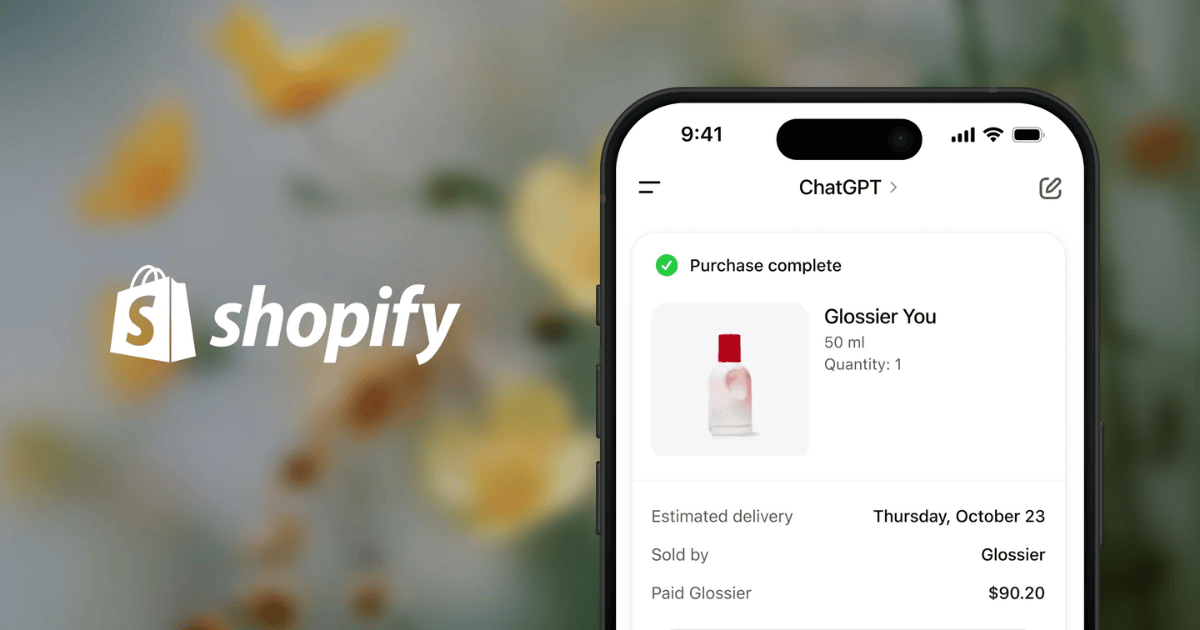
Shopify's address validation has typically been a checkout step, using autocomplete to catch human typing errors. This worked when people were the main source of mistakes. With Shopify Agentic Storefronts, live since March 24, 2026, a new problem has emerged. AI-driven orders introduce address errors that checkout validators cannot see or fix.
AI agents submit orders using stored data, which is often outdated or incomplete. Unlike a person typing, the AI uses a profile the customer may not have updated since they moved. This creates a new type of error that looks correct in your Shopify admin. However, it can cost you $25.50 per package in carrier correction fees (FedEx, 2026 rate card) once it leaves your warehouse.
How are AI order address errors different from human typos?
AI agent orders use stored profile data, which can be old or incomplete. This differs from human errors made during a live checkout. The AI submits the order programmatically, so the customer never sees the address to correct it. This leads to a higher rate of stale or inaccurate addresses.
In a standard checkout, a customer interacts with the address form. They either type their address or use autofill, providing a chance to review it. Errors from this process are often simple, like a forgotten apartment number or a mismatched zip code. Checkout validators are designed to catch these present-moment mistakes before payment.
AI agents work differently. When an AI like ChatGPT places an order, it pulls the address from the customer's account profile. This data might come from several sources:
- An address entered when the account was first created, which may now be outdated.
- Inferred location data that is not precise enough for delivery.
- A default address from another linked platform that has not been updated.
- An old billing address from a payment method the customer still uses.
In these cases, the customer never chose the address for this specific purchase. The order arrives in your admin with a shipping address that was retrieved from a data store, not confirmed by the user. The first time you see it is after the payment has already been processed.
What kind of address errors do AI orders cause?
AI-sourced orders often have stale addresses from customers who have moved. They also frequently have missing unit numbers and postal format errors for international shipments. These issues arise because the AI uses stored data that the customer has not recently reviewed or confirmed for the purchase.
Stale Address Data After a Move
The most common AI-specific error is a stale address. This is an address that was once correct but is no longer valid because the customer has moved. In a normal checkout, a customer who has moved would likely update their shipping address. With an agentic order, there is no checkout moment for the customer to catch this error.
Approximately 9% to 10% of the US population moves each year (US Census Bureau). This means that over two years, about one in five of your customers has a new address. If AI agents use profiles that are two or more years old, the rate of bad addresses will be much higher than the 2.1% industry average for human checkouts (Shippo).
Missing or Incorrect Unit Numbers
Missing apartment or unit numbers are a primary cause of carrier address correction fees. Both FedEx and UPS charge these fees when a package cannot be delivered as addressed. According to Loqate, 74% of companies report that bad address data causes up to 25% of their failed deliveries.
A customer typing their address usually includes their unit number. An AI agent, however, uses the stored profile data. If the unit number was omitted, entered in the wrong field, or formatted incorrectly in that profile, the AI submits the incomplete address. The package then arrives at a building but cannot be delivered to the specific unit.
International Postal Format Errors
International addresses add another layer of complexity. Postal formats vary widely between countries, including the order of address lines and the structure of postal codes. An AI may use an address that was valid on one platform but does not meet the carrier's requirements for the destination country.
For example, a Japanese address stored in its standard format is accurate in Japan. However, if it arrives in your system in an order that does not match the carrier's expected format, it may be undeliverable. The address itself is not wrong, but its format is incompatible with the carrier's routing system, resulting in a correction fee.
Can't I just use a checkout address validator app?
No, checkout validators cannot solve this problem. They work by adding logic to the checkout UI, but AI agents bypass the checkout form entirely. They submit orders programmatically after payment, so there is no opportunity for a checkout-based tool to intervene and prompt for a correction.
Checkout validators require a human interacting with a checkout form before payment is complete. This allows the tool to identify an error and prompt the user to fix it. Agentic orders have none of these components. There is no checkout form, no pre-payment moment for a UI tool to run, and no customer at a browser to respond.
As Shopify confirmed in its Agentic Storefronts documentation, AI-placed orders flow directly into the standard Shopify Orders list. They arrive after payment has been confirmed, having never passed through the checkout layer. The issue is an architectural mismatch. A different type of validation is needed for these orders.
How does post-order address validation work?
Post-order validation checks an address after payment but before fulfillment. It intercepts every order, validates the address against carrier data, and can automatically hold an order with a bad address. The system then emails the customer a link to correct their own address, preventing manual work and carrier fees.
This process works by checking every order that enters the Shopify admin, regardless of its source. The validation happens at the API level, using the carrier's own intelligence to assess deliverability. This check runs on orders from standard checkout, Shop Pay, Apple Pay, TikTok Shop, and AI agents like ChatGPT.
When a problem is found, the order is automatically held. The customer receives a branded email with a one-click link to correct their address. Once corrected, the hold is released, and the order proceeds to fulfillment. The warehouse never sees the bad address, and the carrier correction fee is avoided.
If the check finds a minor issue, like a zip code that can be fixed programmatically, the correction is applied silently. The order continues without interruption. If the address is clean, the order passes through with no delay. This three-outcome model handles the full range of address quality issues automatically.
Is post-order validation worth the cost for my store?
Yes, the financial case is strong even at low AI order volumes. For a store with 500 monthly orders, the cost of carrier correction fees from just a few bad AI-sourced addresses can cover most of a validation tool's monthly plan. This prevents a consistent drain on profit margins.
Consider a store with 500 orders per month, where 10% come from AI channels. That is 50 AI-sourced orders. If these have a bad address rate of 3%, slightly above the 2.1% industry baseline (Shippo), that is 1.5 bad addresses monthly. At $25.50 per correction fee (FedEx, 2026 rate card), that is $38.25 per month in preventable fees.
Annualized, this amounts to $459 in carrier fees from AI orders alone, not including support costs or reshipments. For comparison, Tacey's Starter plan is $29 a month. The savings from preventing AI-related correction fees can cover most of the plan's cost, even before counting the savings from your other channels.
As AI channel volume grows, the savings increase. If that same store sees AI volume grow to 30%, it would have 150 AI-sourced orders monthly. At a 3% bad address rate, that is 4.5 bad addresses, costing $114.75 per month in preventable fees. The financial case for post-order validation becomes even stronger.
What's the right address validation strategy for my store's size?
The best approach depends on order volume. Manual review is feasible under 200 orders per month. For stores with 200 to 1,500 orders, automated correction with some manual oversight is best. Above 1,500 orders, full automation is the only sustainable method to handle the volume efficiently.
| Monthly Order Volume | Recommended Approach | Why It Works |
|---|---|---|
| Fewer than 200 | Manual review of flagged orders | Volume is low enough for a human to check each flagged order without creating a bottleneck. |
| 200 to 1,500 | Automated validation with escalation | Automation handles most issues, escalating only true exceptions that require human judgment. |
| 1,500 or more | Fully automated validation | High volume makes manual intervention on any significant number of orders operationally impossible. |
Tacey handles post-order address validation at every volume. The moment an order is placed from any channel, Tacey checks the shipping address. An address it can't confirm is tagged in your Shopify admin, and the customer can correct it themselves on the order status page before the order ships. If the check can't run, the order goes through marked not checked, never falsely verified. You see the outcome on every order, and your team only looks at the ones that need it.
Because Tacey operates at the order layer rather than the checkout layer, it works identically on standard checkout orders and AI-sourced orders. The channel is irrelevant. Every order passes through the same validation logic. As your AI channel volume grows, the validation coverage stays complete without any adjustment.
Install Tacey from the Shopify App Store and try it free for 14 days. Plans start at $29 a month and scale with order volume.
The carrier correction fees from unvalidated AI-sourced addresses are a consistent drain on margin that grows with AI channel volume. Addressing the source of these fees at the order layer, before they reach the carrier, is the only point in the process where they can be eliminated rather than absorbed.
Frequently asked questions
What is a Shopify Agentic Storefront?
A Shopify Agentic Storefront allows AI agents, like ChatGPT, to place orders on a customer's behalf. These agents submit orders programmatically using stored user data, bypassing the traditional online checkout process that a human customer would use.
How much does a bad address cost in carrier fees?
A bad address can cost $25.50 per package in carrier correction fees, based on the 2026 FedEx rate card. This fee is charged when a carrier like FedEx or UPS must correct an address to complete a delivery, a common result of incomplete or inaccurate address data.
Why are AI-sourced addresses more likely to be wrong?
AI agents use stored profile data for shipping addresses, which can be outdated if a customer has moved or incomplete if they omitted details like a unit number. Unlike a human at checkout, the AI does not give the customer a chance to review or correct this information before placing the order.
What is the most common type of AI-related address error?
The most common error is a stale address, which occurs when an AI uses an old address for a customer who has moved. With roughly 9-10% of the population moving annually, profiles that are a few years old have a high probability of containing an outdated address.
Why can't a checkout validator fix AI order errors?
Checkout validators work in the user-facing checkout form, before payment is confirmed. AI agents bypass this entire layer, submitting orders directly to Shopify's system after payment. A checkout validator never has a chance to see or analyze the address on an AI-placed order.
What happens when a post-order validator finds a bad address?
When a bad address is detected, the order is automatically put on hold to prevent it from being shipped. The system then contacts the customer with a link to correct their own address. Once the customer provides a valid address, the hold is released, and the order proceeds to fulfillment.
Does post-order validation work on orders from all channels?
Yes, because it operates at the order layer after payment, post-order validation works on every order regardless of its source. It processes orders from standard checkout, mobile payments like Apple Pay, social commerce channels, and AI agents with the same logic.
 Install on Shopify